“Star,” our tour leader, had us up early at 5:30 a.m. Fortunately, we’re pretty much over jet lag. After breakfast we set out on a morning game ride, this time entering the national park. We had an escort of baboons leading us out of the camp.

At the park entry gate we were greeted by a hord of mongosses (mongeese?) who had discovered a littered plastic bag in the road, presumably with something edible inside. There must have been 30 of them swarming over it. But when our truck approached they scattered into the grass near the roadway.

The rest of the morning drive was a bit of a disappointment after our expectations had been raised by the previous evening. We saw plenty of animals, but repeats of the same we had seen before.

Still, the weather was gorgeous and we got some excellent photos of various species of mammals and many, many birds.

In the afternoon Star arranged a walk for the half dozen or so of us who were feeling a lack of exercise from sitting in vehicles so much. Rules insist that we be accompanied by one of the certified game guides, although the chances of encountering a dangerous animal in the heat of the afternoon are almost nil. “D,” our game guide, kept a slower pace than we would have liked, but we walked along the paved highway toward the river.
At the Botswana border post, which is perhaps a kilometer up the hill from the actual border, “D” managed to persuade the border guards to continue walking down the hill, despite the fact that we didn’t have our passports with us, nor had we obtained the required visas to enter Namibia.

We walked across the bridge, so we can say that we’ve been to Namibia. But since the Namibian border post is similarly up the hill from the river on their side, we didn’t go near it before turning back. No official entry, no passport stamp.
The evening game drive was similar to that of the morning, with lots and lots of animals but few new sights. Dinner was very good, but we are all in withdrawal due to the breakdown of the internet.

Although we slept quite well, we could hear an elephant grazing on the grass and small branches just outside our cabin. And since we’ve learned that elephants graze for roughly 18 hours of every day, he or she kept it up most of the night and continued in the early morning.


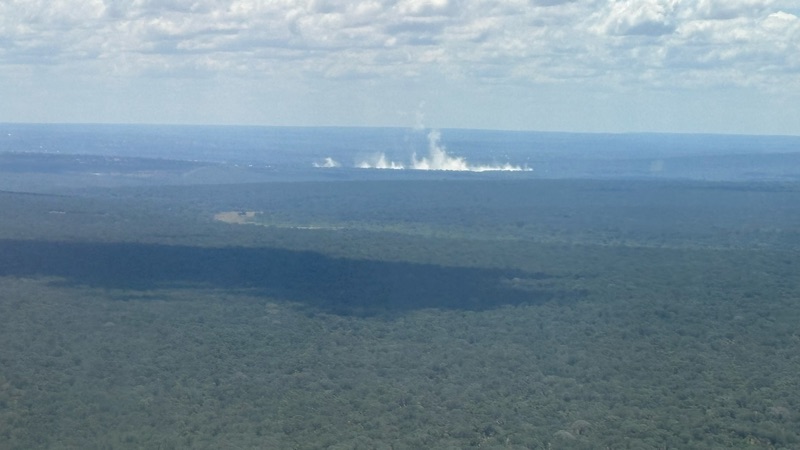 As we were landing, we got a glimpse of Victoria Falls from the air. We’ll return here near the end of the trip to see the Falls up close, on the ground.
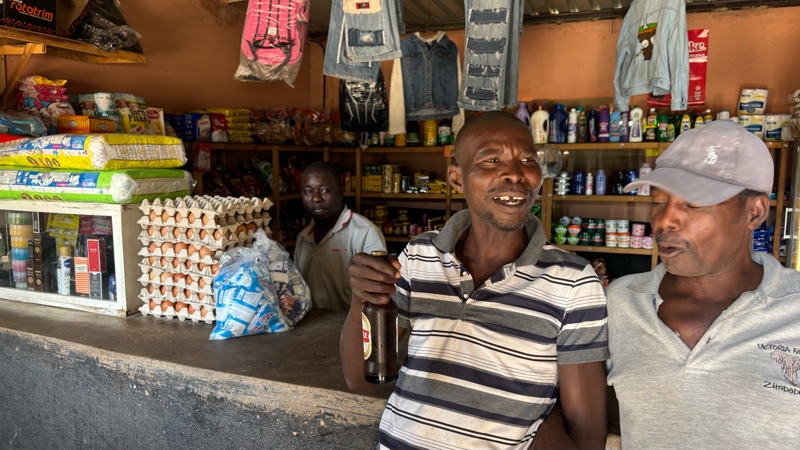 We had one stop at a very primitive roadside area. The people were extremely friendly, and our new best friend “Clive” volunteered to take us on a tour of the place that included the butcher shop, the sports bar, grocery store (where we met his father and uncle, above) and the porridge restaurant. Porridge is a stew of beef or goat, often mixed with or served on top of mashed boabob fruit (think sour mashed potatoes). We declined the taste test, especially since we had just seen the butcher shop where the meat probably had come from.
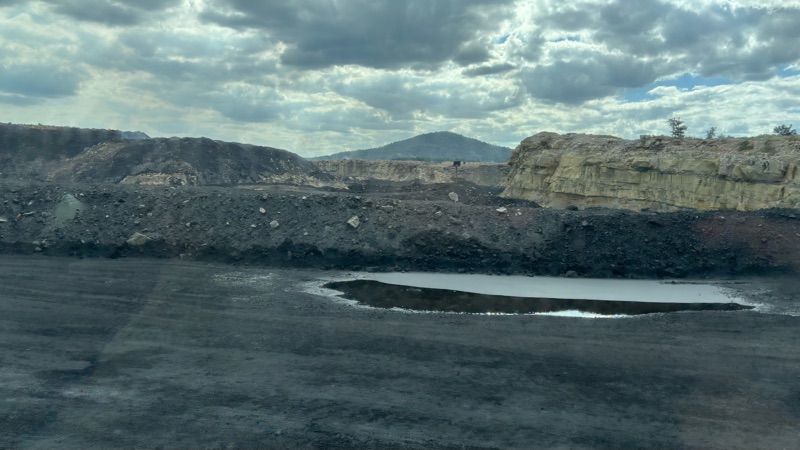 Our route took us through a series of huge open-pit coal mines that are disrupting thousands of acres of countryside. These are being operated by Chinese and Russian companies that bypass environmental regulations by bribing the inspectors. Bribes are common here for nearly everything. We are told that a U.S. 5 dollar bill can get a person out of almost any traffic ticket or hassle with a border guard.
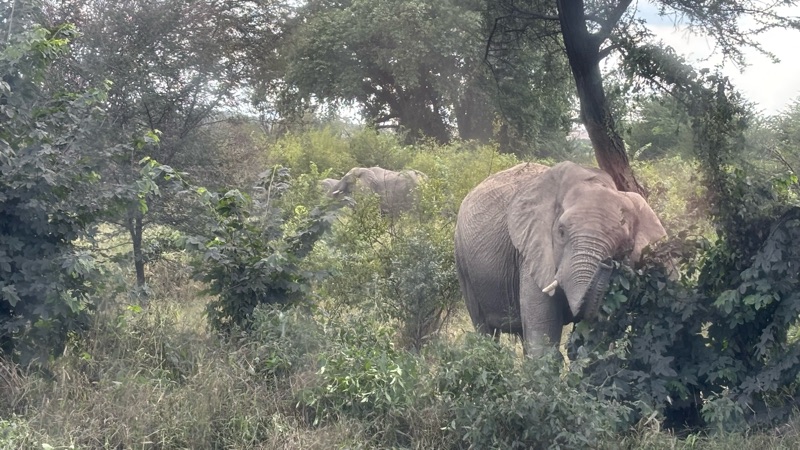 The mines extend right up to the border of the national park. But the elephants don’t read the signs, so we passed a small family of elephants grazing in the midst of the mines.
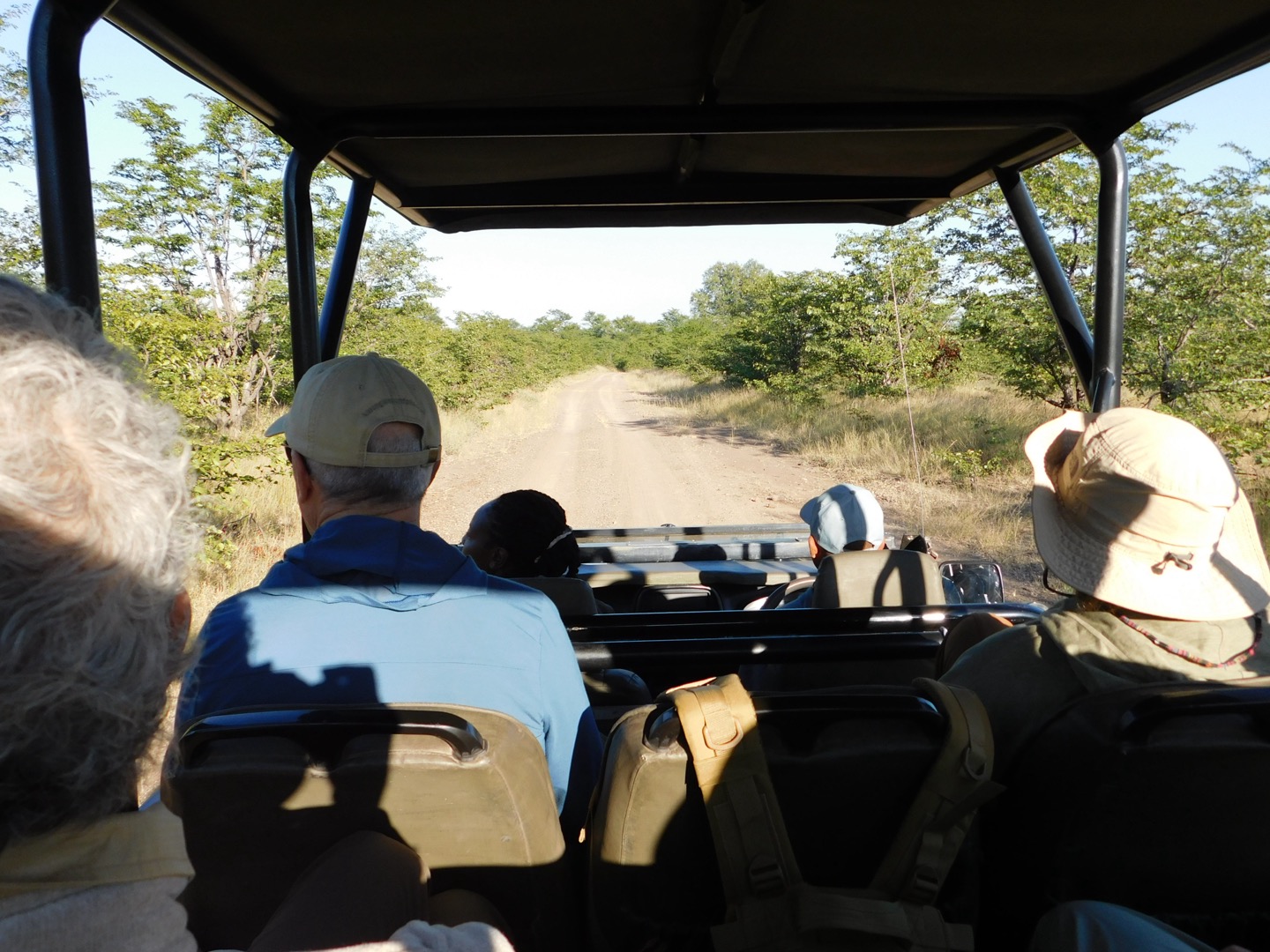 These roads made the highway I described earlier look like an interstate. Imagine the worst-maintained rural gravel road in Iowa.
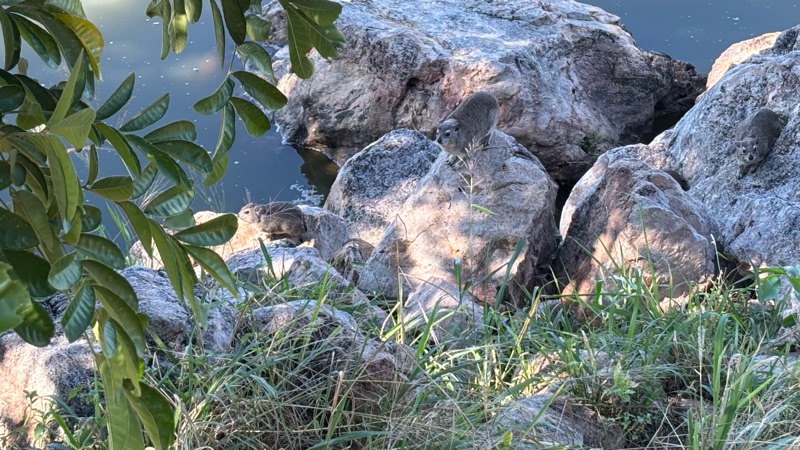 Nevertheless, our game drive driver, Garry, has very sharp eyes, and we were able to see impalas (larger deer), hydrax (rodent-like creatures), cliff springers (small deer), and warthogs, as well as many species of birds.
 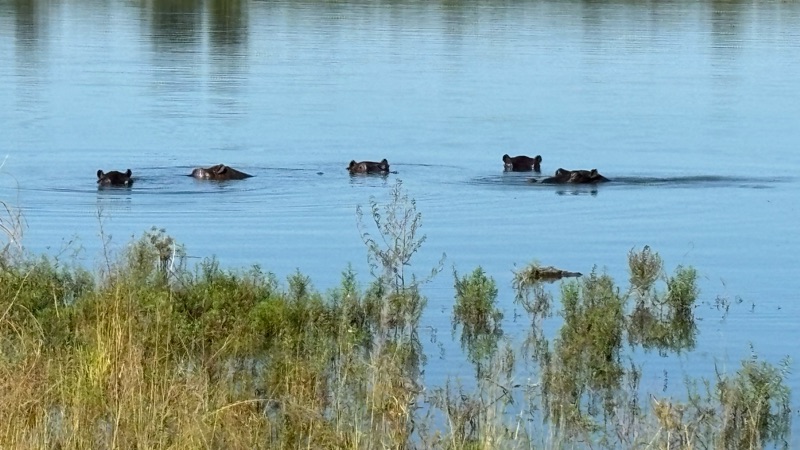 At a lake, we observed hippos and crocodiles
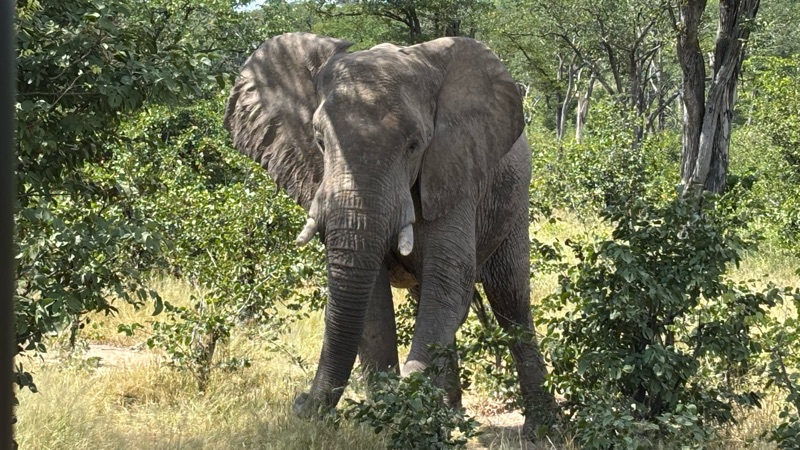 On the way back to camp for lunch, a large bull elephant greeted us just outside the camp, and he was kind enough to pose politely for our photos before moving on.
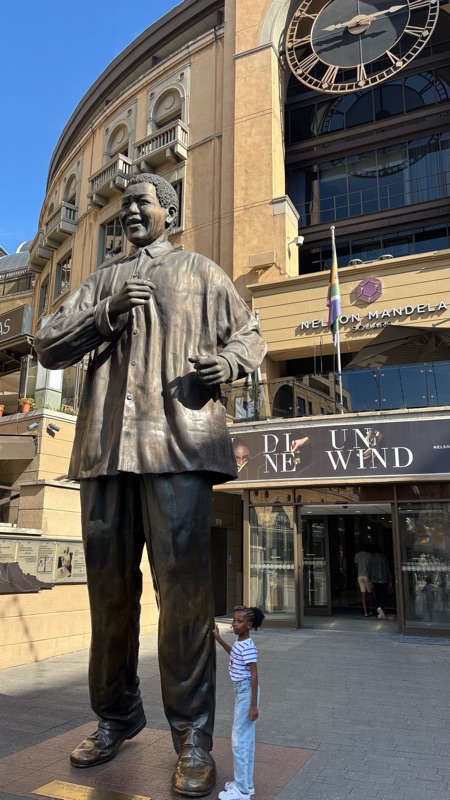 Unfortunately, Good Friday is a major holiday here and all of the museums and historical sites were closed. Nevertheless, we got to see Mandela Square, and to get a very good look at the sharp contrast between the “haves” and the “have nots” here.
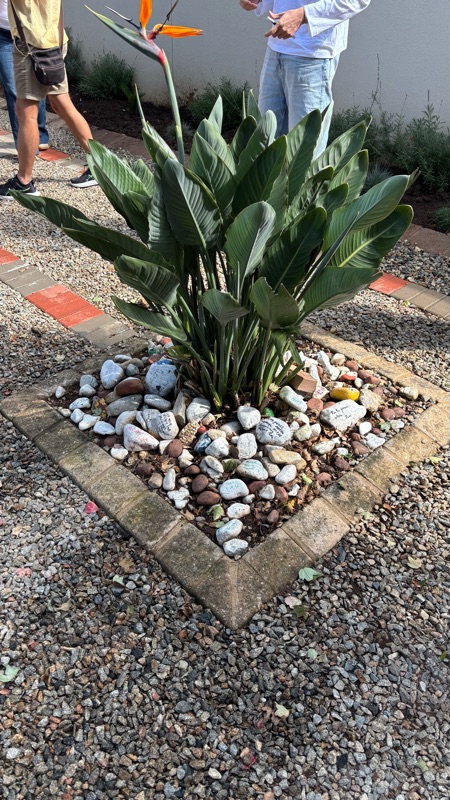 A high wall kept us from seeing Mandela’s house, but we could read some of the hundreds of messages written on rocks that people have left outside.
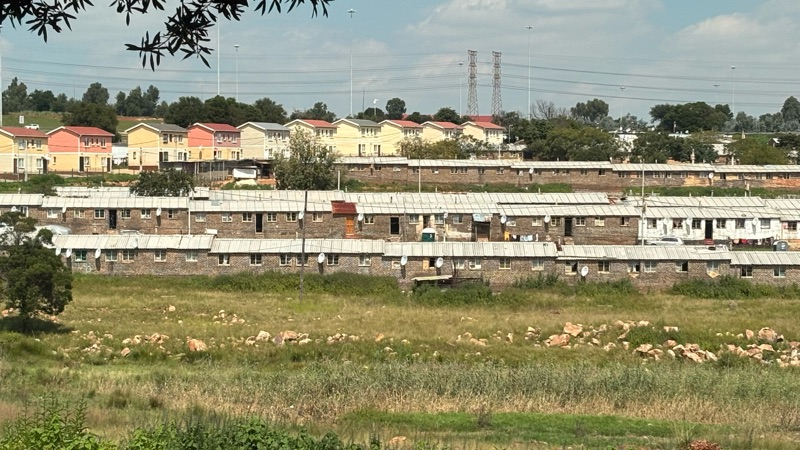 Soweto (the SOuthWEstern TOwnship) is famous as the locus of the fight for racial equality in this country. We were surprised to learn of contrasts even here, where there are modern new homes next to squatter slums.
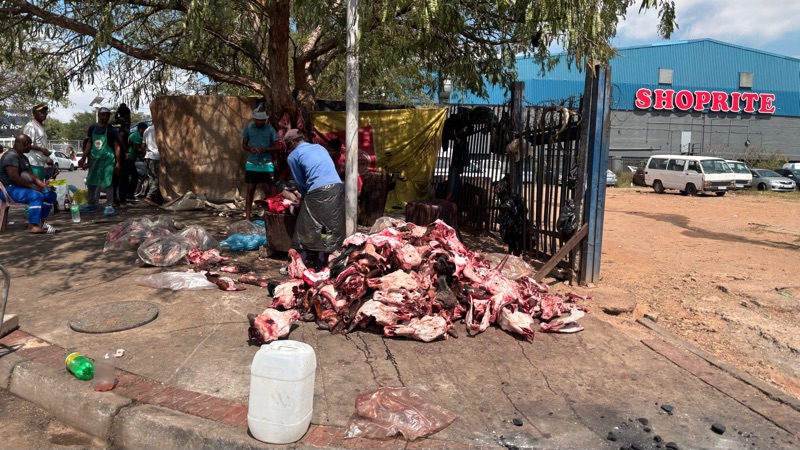 We were also a little shocked to see goats feeding on garbage and the sidewalk restaurants serving “gentlemen’s menus,” which are parts of a cow one generally would hesitate to eat.
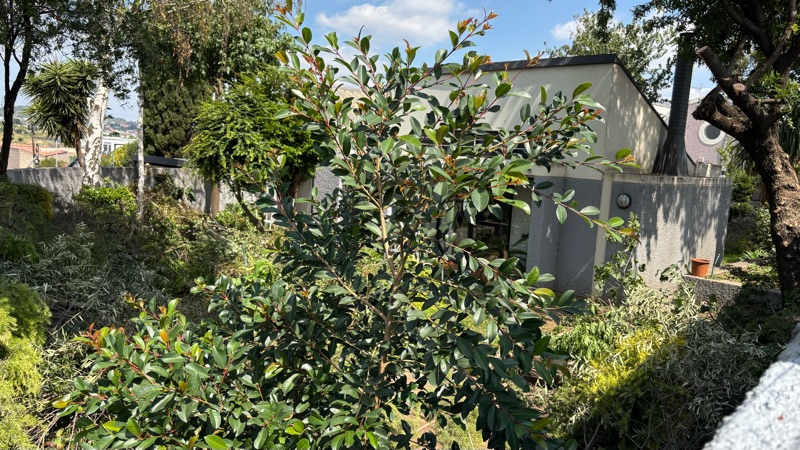 We also got a glimpse of Desmond Tutu’s modest home (somewhat obscured by foliage), and some outdoor monuments to the anti-apartheid struggle. But the tour ended early due to the many closures. Just as well, as we join the OAT group and head to the airport very early tomorrow for our flight to Zimbabwe.