Wednesday, January 15, 2020

On to NZ

Today was a travel day — Fiji to New Zealand. The distance is not that great: Nadi to Aukland is just over a three hour flight. But getting packed and checked out of the resort, drivng to the airport, waiting for the plane, getting through immigration and customs in Aukland, all took much of the day. Then we had to wait for a short domestic flight to take us on from Aukland to Wellington. We didn’t get all checked into our hotel until almost 10 p.m. A largely wasted day, but it has to be done.

Customs in New Zealand is ruthless. They are determined to protect their ecosystem from invasive species. Everything gets X-rayed. If you are caught with any fruit, plants, seeds, food items of any kind — even untreated wood items, such as carvings — it is an instant fine of 400 New Zealand dollars (about $265 U.S.) on the spot. Don’t forget to declare that candy bar!

Our hotel in Wellington is old and rather dated, but very well-located, right in the center of the business district, and a short walk to nearly everything.
Last sunset in Fiji

Tuesday, January 14, 2020

A Long Way to Go

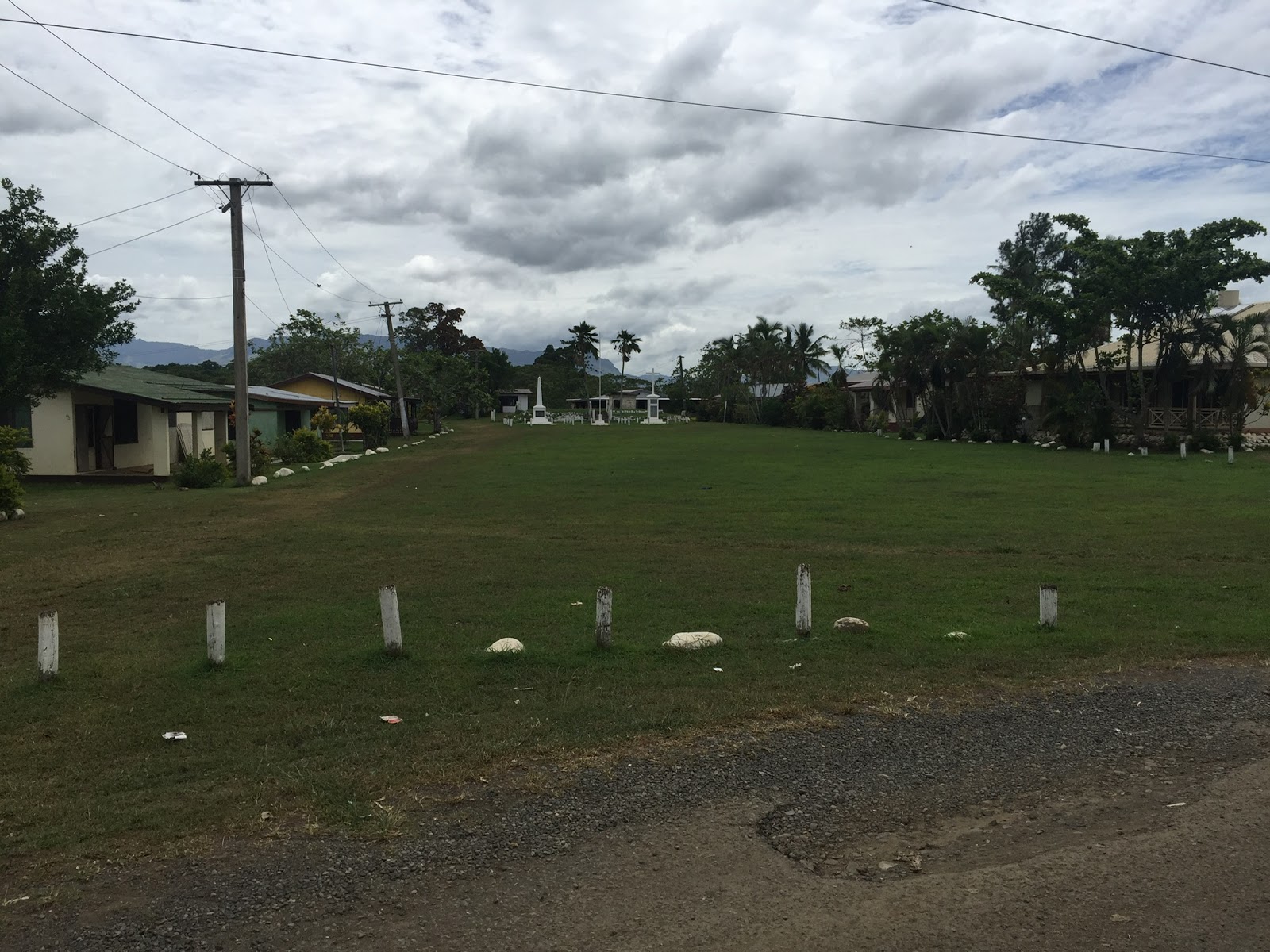
Today was our “day in the life” experience. We’ve already visited a village, so this was to be a look at city life. It was a reminder that Fiji is still a developing nation and that even the “cities” have an essentially rural atmosphere.

Our local guide took a lot of time pointing out various industrial sites on the way into town. She even asked the driver to stop in the middle of traffic (well, such as trafic is) so that we could take photos, through the bus window, of the “historic” sugar cane mill. In this instance “historic” could be translated as 100 years old and in very bad shape. She also seemed very proud of the flour mill and the brewery.

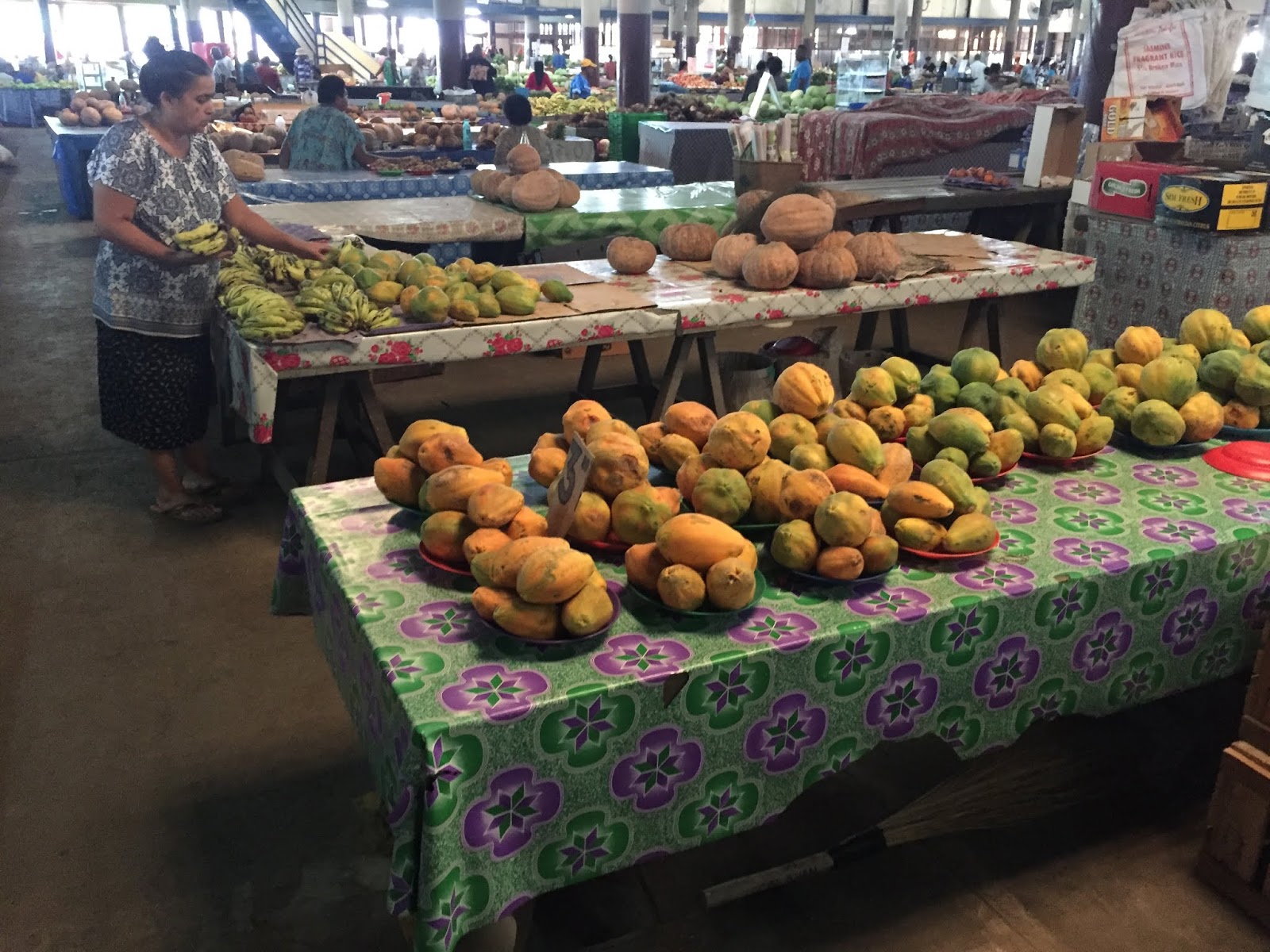
We eventually arrived at the town market. I must admit that, as markets go around the world, this one was cleaner, better organized, and less chaotic than most. It didn’t even smell! Even the fish section didn’t smell terrible, and the fish on offer were far more colorful than those in most places.
Interestingly, produce is not sold by weight — almost none of the merchants had scales. Everything was simply priced by the “heap” or by the “bundle.” Exact measurement was unimportant, but the heaps were remarkably consistent in size.
Some of the unusual produce on offer included Kava root (see yesterday’s post), and dora (a local variety of taro root), and “spinach” that was actually dora leaves. It wasn’t clear why the leave weren’t being sold along with the root. They were always sold separately.
Kava roots and a scoop of kava powder
A significant difference between village and town is that the Indian population is concentrated in the more urban areas. We stopped at an Indian sweets stand and our tour leader purchased a variety of items for the group to try. Most were identical to things we had had in India, or even at home, where Indian immigrants and Indian cuisine are both in abundance.

We were driven a short distance to the “modern” shopping center. The local guide was clearly very proud of this, and assumed we’d be impressed. But Mall of America it was not. There was one department store, that did seem pretty well-stocked, a small food court, cell phone shop, travel agent, one liquor store, and a not-so-super supermarket. We spent our time in the supermarket because the variety of foods is always interesting.

We left modernity and drove out of the city center and into the suburban hills. The area was described as “middle class,” but we learned that some neighborhoods had only recently gotten hooked up with running water or electricity. We were on our way to our home-hosted lunch.
The home we visited was one that had only recently gotten running water, and they were looking forward to getting electricity later this year. The home was quite basic, but the family was exceptionally welcoming and we enjoyed a delicious “Findian” lunch. Our host was the Mormon bishop of the local ward.
Our return trip was via the “back way,” which was entirely rough, gravel road. Scattered houses featured chickens and junk cars in the yards. The natural beauty was stunning, but so too was the poverty. Fiji is a scenic land of proud, happy, friendly people. But it is still a work in progress, developing slowly.
Back at our thoroughly first-world resort, we enjoyed a dip in the pool, a couple of cold beers, and a cooking lesson from the restaurant chef, followed by our “farewell to Fiji” group dinner. Tomorrow, it’s on to New Zealand.

Monday, January 13, 2020

Kava

This has not been a very full day. We didn’t begin until 9 a.m., and we essentially finished at noon. The rest of the time has been free for sitting by the pool, etc. It is plenty hot for other activities, and more rain appears to be on the way for afternoon.

Our morning was spent at a local village. On the way, we were briefed on all of the protocols for meeting the village chief, but he was a no-show. In fact, no men met with us at all. The wife of the village head man (second to the chief) was our hostess, along with several other older women. It appeared that almost everyone younger was away working somewhere, either in the fields or in town.
The first order of business was an official Kava (KAH-vah) ceremony. We stood outside the main door of the village hall, removed our shoes, and all together shouted the Fijian equivalent of, “may we come in?” When answered by the same women who had greeting us when we got off the bus (but who had entered the hall by a side door) we entered and sat of woven mats on the floor.

Our guide provided our gift of two small bags of Kava power. Kava is a plant that grows wild in the hills, but now is cultivated for local consumption. It looks similar to sugarcane, but it it primarily the root that is dried and ground into powder. The powder is poured into a cloth, soaked in water, and then wrung out into a large bowl. It has the consistency of dishwater, and a flavor that resembles dishwater, as well. It is definitely an acquired taste.

The Kava drink is scooped out of the large bowl with a half coconut shell and presented to the “chief” of our group. On the bus, we had designated a retired oil company executive from Alaska as our chief for the day. “Chief Bruce” was asked if he wanted “high tide” (a full bowl) or “low tide” (just a taste). Being adventurous, he took high tide. The same bowl was refilled and presented to each of us in turn, common cup.
Each person receives the bowl by shouting “Bula!” (BOO-lah) — an all-pupose word that means “hello,” “welcome,” “cheers” or what you say in Fiji whenever you don’t know what else to say. Then you empty the cup in one chug while everyone in the circle claps three times. Handing the bowl back to the cup-bearer, the drinker shouts “Ven-EE-kah,” which means “thank you.” When everyone present has had their drink, seconds are offered.

No one in our group took seconds, but everyone took at least low tide. We’re an adventurous group. We had been told that we could pass, but for a native Fijian it would be a big insult to turn down at least one bowl of Kava.

Kava is not alcoholic, but has a mild sedative or anesthetic quality. Even a small drink leaves a bit of numbness of the tongue. Large quantities lead to slurred speech and sleepiness. It is the stuff that makes peace among warring tribes.
After Kava we had a very leisurely, somewhat haphazard tour of the village, which consists of 52 houses and a couple hundred people. We visited the pre-school, which is still out for summer vacation, but will start again next week. The teacher happened to be there, preparing the room. She walks from another village and stays through the week, returning home on weekends. This school is free for all children, ages 3-5.
Primary school students walk to school in a nearby village, and high school students ride a city bus to a place a bit farther away. All education for ages 3-18 is free, as is health care for all. The village has a “nurse,” who was described as more of a person trained in first aid. A clinic is in a nearby town, and a hospital in a city about a half-hour drive away. This is not a wealthy country, but they afford this, which make one wonder why the U.S. finds it so difficult.
 Methodist Church
We were also shown the “Fijian Phone Booth” where the log drum is housed. The drum is only sounded by the Head Man, who calls the villagers to weekly town meetings, to the Methodist church on Sunday, and to alert in times of danger. As she was showing us this traditional medium of communication, her cell phone rang, with her son calling via Facetime from Canada. So much for the Fijian Phone Booth.
Our tour ended with lunch back at the village hall. The meal consisted of fish, fresh water muscles, taro, plantains, egg plant, spinich, and pineapple, along with fruit juice. Fijian food tends to be pretty bland, so many of the restaurants serve a “Findian” menu, adding Indian curries and spices to traditional dishes.
When we were finished, the women sang a traditional farewell song, with several parts of harmony. It was similar to the song that the boat crew sang to us yesterday as the boat docked at the end of the day. It seems to be a song that every Fijian knows well.

Sunday, January 12, 2020

Tivua Island

Today’s adventure was an optional cruise to a private island. Most of our group signed up for this option. We were picked up at the hotel and transported to a port in a more up-scale, somewhat more developed area known as Denarau. From there we boarded a large motor catamaran that took us on a roughly 1.5 hour cruise to the small island of Tivua.
The first order of business was to claim one of the many small, thatched-roofed “cabanas” on the wide, white-sand beach. Once we had put our bags down, we went to be issued snorkel gear — mask, fins, and snorkel. There was some confusion about what was going to happen when, but we finally got word that we should take our snorkel gear with us for a ride on a glass-bottomed boat on which a guide gave us some background about the ocean in this area.
This is a rather shallow area. The coral here suffered serious damage from a category 5 cyclone here several years ago. It has been unable to recover in the way it normally would due to rising sea temperatures (global warming). A third factor, said the guide, is that this area is visited daily by “a very dangerous boat” — the one we came on, loaded with humans and all of the activity and chemicals they bring with them, especially sunblock lotions that acumulate in the water.
We observed that in many areas the coral was entirely dead, while in other places, primarily where the water is a little deeper, there is at least some living coral of various types. There were, nevertheless, a large number of colorful tropical fish. These usually are found where coral is healthy, but the island operators compensate by feeding the fish to keep them coming back, even when the coral here is not healthy.

After the boat ride, we were invited to snorkel. Unfortunately, the “instructor” for this activity was a young man with very little idea of how to instruct. First, he kept addressing most of us as “grandmother” and “grandfather” — probably terms of respect in Fijian culture, but a bit offensive to Americans (even those of us who happen to be grandparents). Second, he didn’t really offer any instruction beyond telling people to get into the water. Some had snorkeled before, so had not problem, but many were unsure and a few completely panicked. I was able to help Mary get started, but some in the group simply bailed out.

After some time in the water, enjoying the colorful fish, we were called to lunch. It took awhile to swim back to the dock, then gather our gear and get to the buffet. The food was basic, but plentiful, and the bar was open with as much beer, wine, or soft drinks as we wished.

We were looking forward to taking out some kayaks after lunch, but a rain squal blew in and the deluge kept us under the cover of the dining area. We discovered that we had been misled with the information that these storms only last briefly. Fortunately, we were under cover in the vicinity of the bar! After an hour or so of watching rain, and attempted entertainment by a Fijian guitar-player and folk-singer, it was called a day and we headed back to the boat.
Before heading out on the dock, we had a moment to experience the daily feeding of the baby sharks. These little reef sharks are pretty harmless (though one young woman who ignored the advice to keep fingers out of the water got a small bite). They swarm to the table scraps from the daily lunch, and rub against ankles like kittens to show their appreciation.
The return boat ride was uneventful, except for being serenaded by the crew, and we are much less tired than the previous evening.

Saturday, January 11, 2020

Fiji Mud

It is typical to arrive at a far-away place and feel that one has lost a day traveling. In this case, we lost two, because we crossed the International Date Line along the way. Actually, the jet lag isn’t all that bad. We left LAX at 9:30 p.m. Pacific time (though that was near midnight for us on Central time). It took them a couple of hours to get us settled and fed. But then we each managed several hours of sleep before arriving in Fiji about 6 a.m. local time. We’re tired, but it could be much worse, and has been on other trips.

Much of what we have seen here so far reminds us of Rapa Nui (Easter Island) which we visited at about this time last year. It’s warm — 80s already this morning — and very, very humid. Palm trees look the same, but the “mountains” are steeper and more numerous. I’m sure we’ll find more differences as time goes on.

Fiji is an archipelago of several hundred islands, of which the island of Fiji itself is, by far, the largest. It is summer in the Southern Hemisphere, and the rainy season here. But that means a good, drenching shower near sundown each evening that usually doesn’t last very long. The sun is shining brightly this morning, with only a few high, cirrus clouds in the sky. The wind is almost still.
One of Fiji’s biggest exports is the spring water that is bottled here and sold very expensively around the world. Here, the same water comes out of the tap, so now we can say we’ve taken a shower in pricey Fiji water!

The resort at which we are staying is called “First Landing,” because legend has it that the first inhabitants came ashore for the first time on the beach where we are enjoying the sun. Those first settlers were “Melanesians” from somewhere in east Africa. They were later joined by Polynesians, who migrated across the Pacific from east Asia. Later still, the British colonialists imported many thousands from India to work in the cane fields. Today, the populatin is about 900,000, roughly 60% native Fijians (who are largely Methodists and reside in rural villages, as well as cities) and 40% Indian Hindus, who reside primarily in urban areas.

We arrived at our resort about 8 a.m. We are in a villa — our own little house with our own little swimming pool outside. We have a covered patio, main indoor room with kitchenette, spacious bath, and a bedroom with king bed. It’s quite nice. After getting cleaned up a bit from the long flight, we took ourselves on a walking tour of the grounds of the resort, ending with breakfast. Because of our early check-in, we had breakfast included today, and it was served until 10 a.m., so we had plentry of time to get to it. However, our internet access is slow and limited.

At 1 p.m. we had our first group meeting. There are 11 of us here on the pre-trip, and 5 more will join us in New Zealand for the main excursion. On first impression, this appears to be a good group of well-traveled folks. Most are retired, but not all.
After the orientation meeting we got on the bus to visit “The Garden of the Sleeping Giant.” Sleeping Giant is a rock formation in the mountains near here. The garden was created by Hollywood actor Aaron Burr (“Perry Mason”) who loved Fiji and built a home here. His hobby was orchids, and this garden has over 1,000 varieties.

Our next stop was a village with a volcanic hot spring that has started a business as a sort of primitive spa. The “changing room” is a clapboard building with wrinkled tin roof and old sheets for doors. Once down to one’s “swimmers,” as our Kiwi tour leader calls our suits, we stood around a bucket of warm slime and smeared it over our skin.
One is supposed to wait until the mud completely dries, but we cheated. Next, a dip in the “mud pool,” which was warm, but with all the ambiance of a farm pond. From there, it was into the “thermal pool” for a very warm dip into water that was only slightly less muddy than the mud pool. It was an experience, but it was certainly no Blue Lagoon in Iceland!

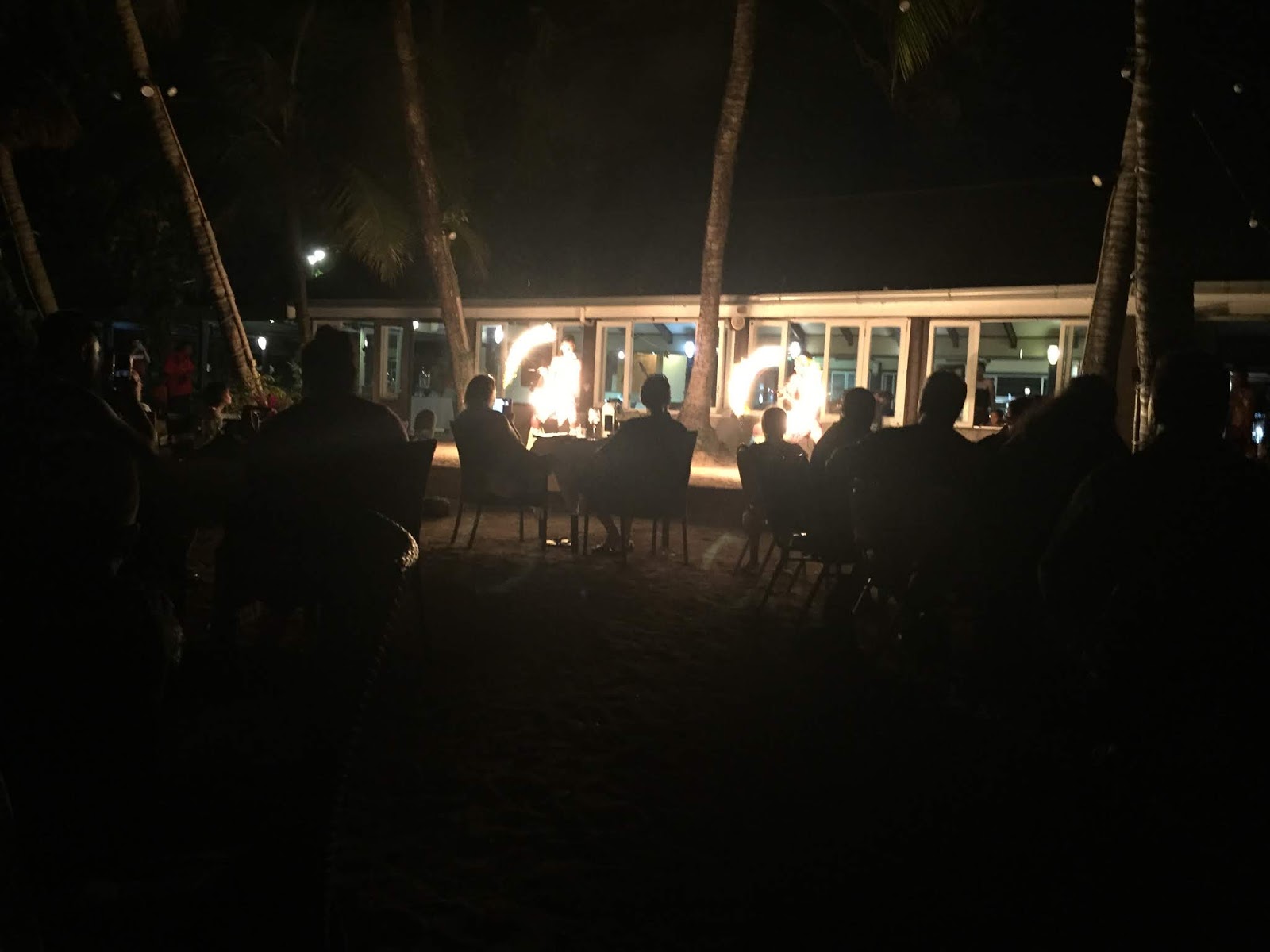
By the time of our “Welcome Dinner” in the evening, the lack of sleep was catching up. The meal was excellent, and the floor show was a group of Polynesian dancers, ending with the grand climax of a fire dance. One has to be pretty tired to nod off during a fire dance! We were in bed before 8:30.

Tuesday, January 7, 2020

Christmas in Minnesota

We are getting ready to travel once again, shortly. But before we do so, just a bit of retrospective on the holiday season that has just passed.

We spent the Thanksgiving holiday in Des Moines, but rented a house through Airbnb to accommodate the entire family.

Christmas was in the Twin Cities. Brandon had to work over the holiday, so Sarah is to be commended for taking on the task of driving solo, with kids, first to Des Moines — to pick up great-grandparents — and then on to Minneapolis.

Kids from snow-deprived areas got the chance to sled and skate.

Matt’s parents host a wonderful holiday party each year for family and friends. Clara was a bit overwhelmed by the “Big Party,” but managed to pose for some multi-generation photos.
 A very happy new year to all, and stay tuned for upcoming travel updates!


Saturday, June 1, 2019

Reflections on Turkey

Up at 5 a.m., we grabbed a quick breakfast and were on the bus for the airport by 6:30. It was an hour drive, and we got to see quite a number of balloons landing or packing up along the road. Another bus with about 40 Chinese tourists arrived just ahead of us, so the sleepy little airport had long lines.
The flight to Istanbul was uneventful, and once at the airport there we said our farewells to our tour leader and group members. We had a bit of a wait for the flight to Frankfurt, which was delayed due to some sort of air traffic control issue. That made our connection in Frankfurt very tight, so we had to move at a very fast pace through that airport.

Frankfurt to Chicago is a 9.5 hour flight, and the plane was a 747. We thought all of those had been retired, but this old bird was still flying. Mark managed to sleep a little, but Mary was not as fortunate. It turned out that the woman seated next to us was also returning from an OAT trip, but in Norway, not Turkey.

We finally arrived in Minneapolis about 11 p.m., and Katherine was kind enough to be our taxi. We got to bed about midnight -- roughly 27 hours after we had awakened in Cappadocia. We were very tired, but jet lag is strange, and we were up early again the next morning.

Turkey is a beautiful country. The time of year helped, because the winter rains make springtime very green. But the land is more lush and fertile than one imagines, especially along the coastal areas. Cappadocia has its own kind of desert beauty.

Another striking feature of Turkey is its blending of east and west. Turks like to think of themselves as Europeans (even though they make a big deal in Istanbul about spanning two continents). Western Turkey is very secular, with younger women dressing in European fashion, and almost no one pausing when the call to prayer sounds from the minarets. But as one goes farther east, the conservatism is dress and religious observance is quite obvious.

Smoking is something we had to get used to. Something like 60% to 70% of Turks smoke -- in the west, that includes many women, as well as men. We've gotten used to smokeless public spaces in the U.S., but smoke is everywhere in Turkey.

People asked us why we would go to Turkey, and why we weren't worried about safety there. Turkey has had its problems with political division and terrorism slipping across the border from Syria, but we generally felt as safe there as we would feel in any unfamiliar place in the U.S. We, too, have political division and mass shootings.

We would recommend visiting Turkey. We had a great time.